Launching a Product Without Physical Limitations: How Virtual Sets Are Changing the Game for Brands

How do you introduce a new vehicle to a European audience when the product is not physically on stage?
How can you showcase its design, explore its interior and highlight its innovations without transporting several models, building a temporary showroom or organising multiple shoots?
With virtual production, the product is no longer simply placed in front of a camera. It becomes the centrepiece of a visual experience in which presenters, content and 3D elements all contribute to the same story.
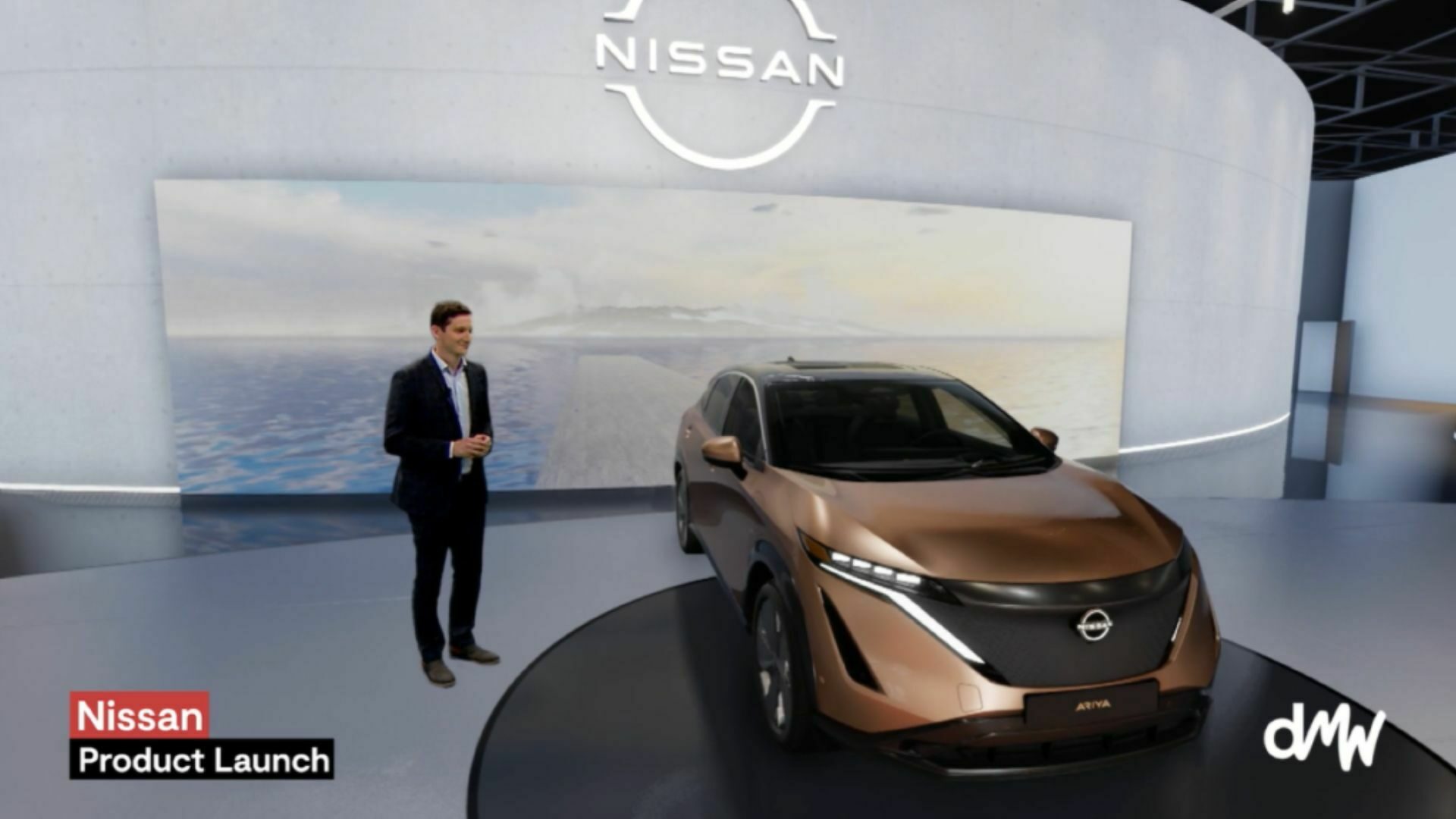
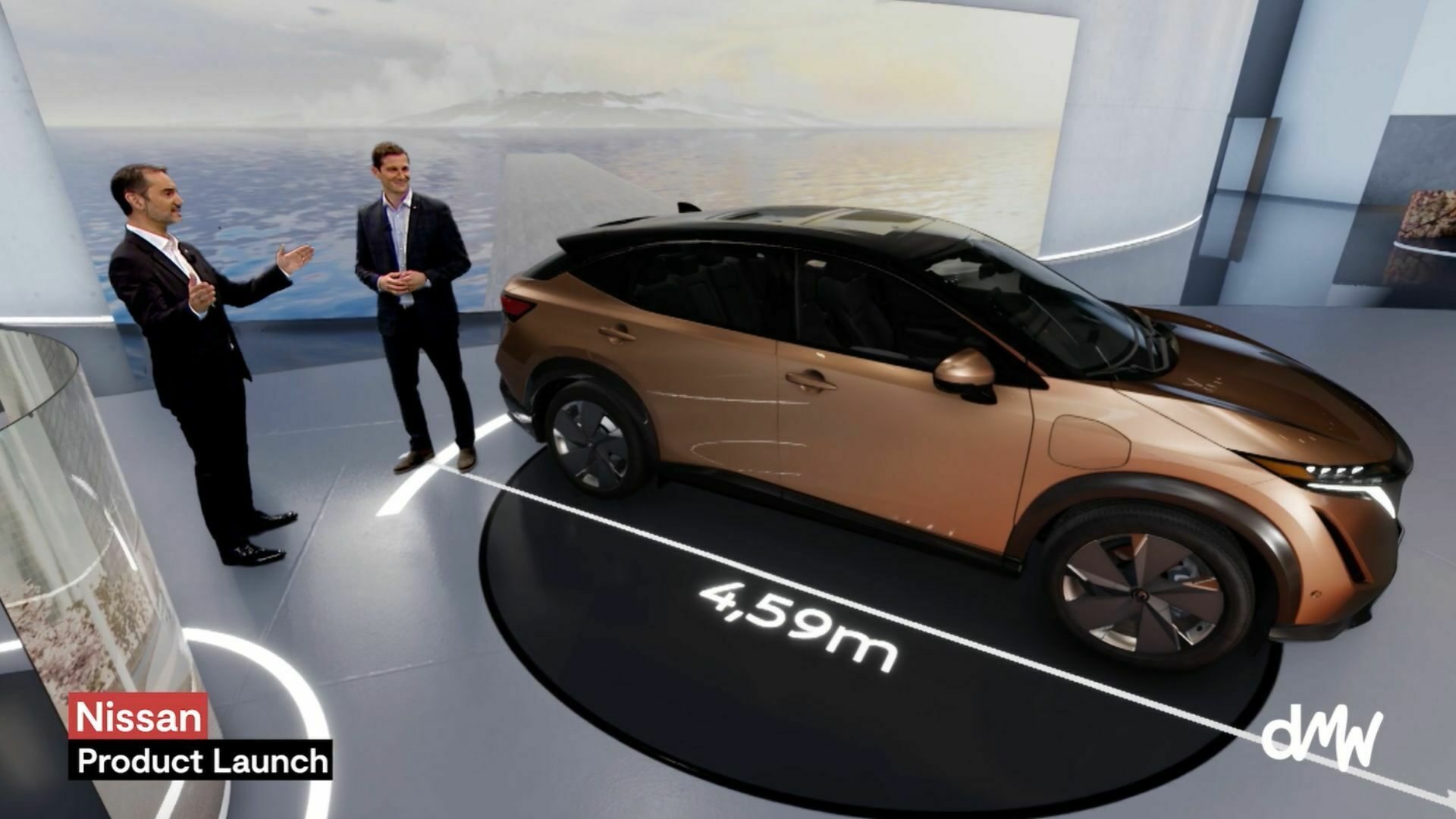
The European launch of the Nissan ARIYA, produced with Dreamwall’s involvement, is an excellent example. Using a digital twin of the vehicle, a virtual set and augmented reality elements, the brand created an immersive and engaging presentation for its European dealership network.

You must accept functional cookies to play this video. Change settings
Product launches facing new constraints
A product launch must capture attention, convey a promise, and quickly help the audience understand what sets the product apart.
However, brands today must navigate an increasing number of constraints:- Audiences spread across multiple cities or countries
- Products that are difficult to transport or not yet available everywhere
- Ever-shorter communication deadlines
- Translation and localization needs
- A growing number of distribution channels
- The need to produce additional content for the press, sales teams, and social media.
A traditional physical event can address some of these needs, but it also involves heavy logistics: product transportation, set construction, speaker travel, technical setup, and venue availability.
Traditional video offers more control, but it doesn't always capture the energy of a live presentation. As for slide decks, they quickly reach their limits when it comes to explaining a complex innovation or building genuine emotion around a product.Virtual sets offer a different approach. They combine the narrative power of a live event, the precision of 3D, and the flexibility of audiovisual production.
Nissan ARIYA: Bringing the audience inside the product
To present the Nissan ARIYA to its European dealers, Nissan needed to go beyond a simple series of vehicle shots.
The challenge was to let a remote audience discover the model, its design, and its universe, while giving presenters the tools to guide the demonstration smoothly.Dreamwall helped bring this experience to life using Zero Density’s Reality technology and Unreal Engine.
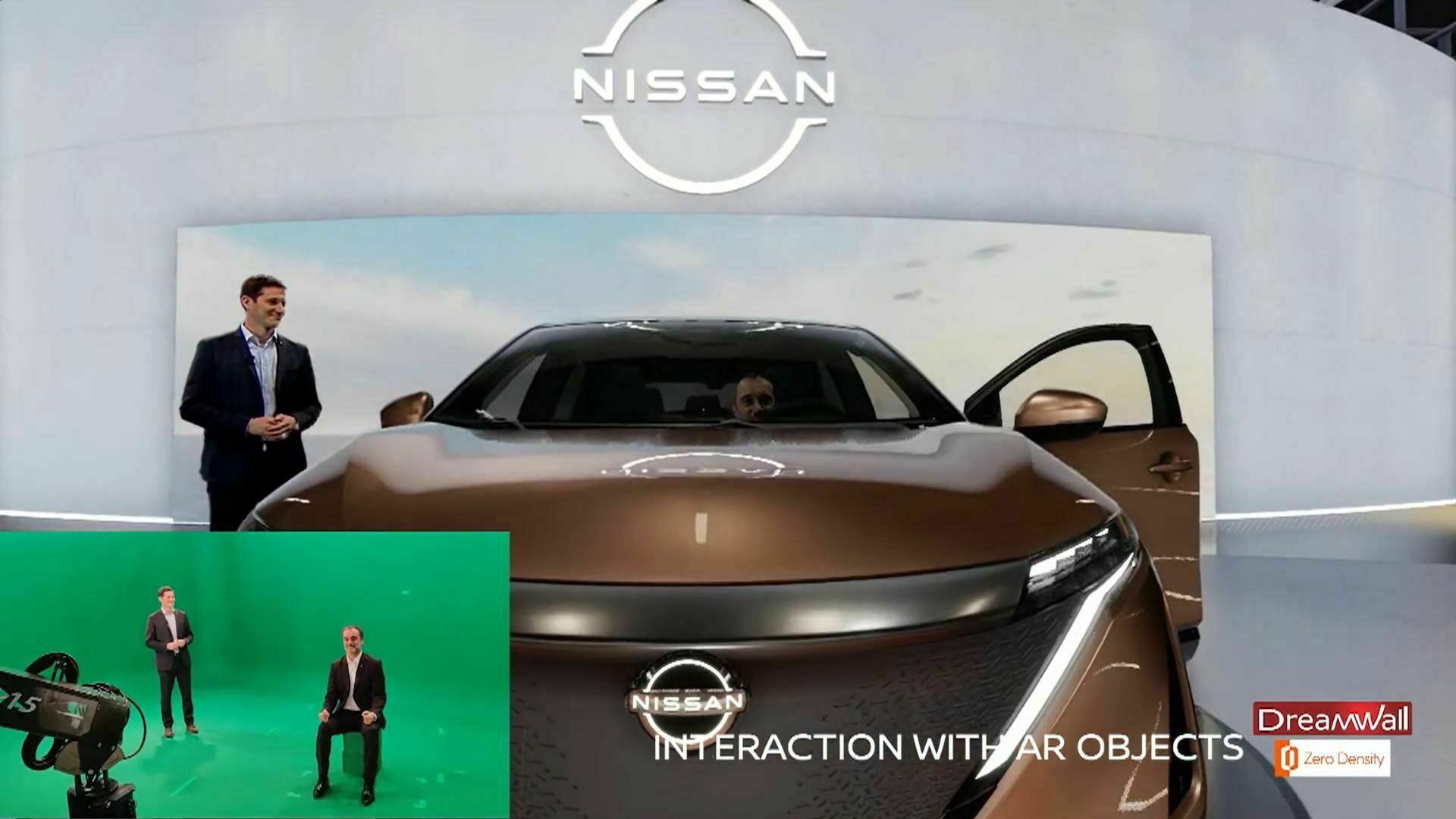
The vehicle was recreated as a digital model integrated into a virtual environment. Presenters could move naturally around this representation, highlight specific features, and interact with augmented reality objects. Videos, text, screens, and remote speakers could also be integrated seamlessly into the presentation.
The final result was far more than just a digital backdrop placed behind the speakers. The entire setup was designed to drive the narrative forward—from the very first look at the vehicle to exploring its full capabilities.
Discover the technical behind-the-scenes of the Nissan ARIYA presentation.
From physical product to digital twin
The first step of a virtual launch is determining what story the digital product needs to tell.
It isn't necessarily about recreating every single component with the exact same level of detail. Modeling should be guided by its intended use:- Which parts of the product will be shown in close-up?
- Which movements will need to be animated?
- Will the interior need to be visible?
- Will certain components need to be isolated or made transparent?
- Will the audience need to compare multiple versions?
- How will the presenter interact with the product?
In the case of a vehicle, a digital twin offers possibilities that are difficult to achieve during a traditional shoot.
The camera can move around the model without any physical constraints. It can zoom in on a detail, transition smoothly from an exterior view to an interior perspective, or follow a movement specifically designed to support the explanation.The product becomes a true storytelling tool. It is no longer merely displayed—it can be broken down, contextualized, and explored at the exact pace of the presentation.
gallery
-
 Virtual Set Product Launch - Nissan
 -
 Virtual Set Product Launch - Nissan


Showing what a traditional camera cannot always capture
Virtual production does not necessarily replace footage of the physical product. It complements it when certain information would be difficult, expensive or impossible to capture with a traditional camera.
A 3D model can be used to:
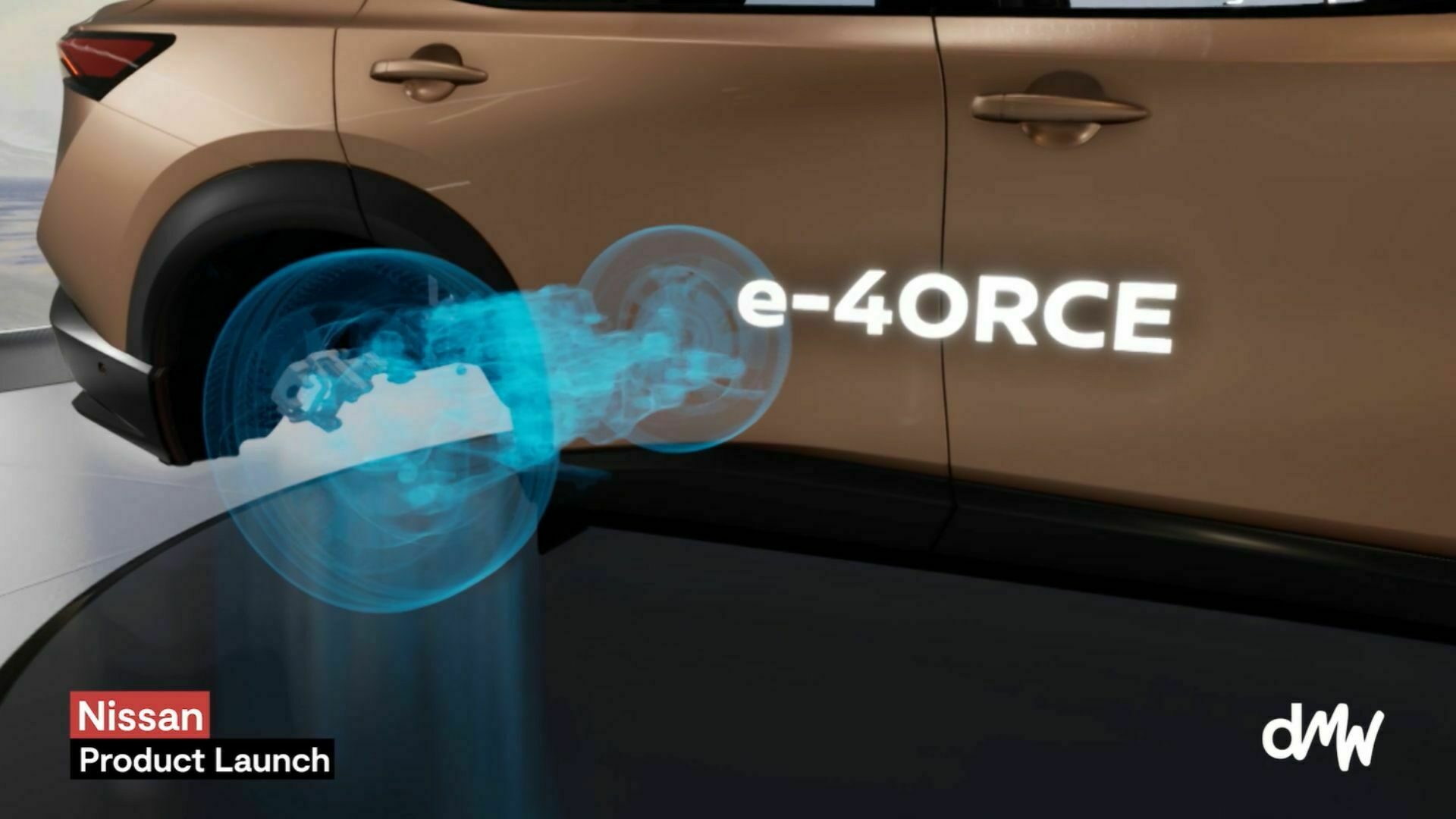
- reveal an internal mechanism;
- visualise a flow or the movement of data;
- compare several configurations;
- instantly change a colour or finish;
- enlarge a very small component;
- scale down a large industrial product;
- present a product that only exists as a prototype;
- demonstrate how it works in an inaccessible environment.
This naturally makes the technology attractive to the automotive industry, but its applications extend to many other sectors, including mobility, lifts, industrial machinery, energy, cosmetics, telecommunications and medical technology.
When a product is too large, too complex, too fragile or simply unavailable at the event location, its digital representation can preserve the quality of the demonstration.
Photorealism in the service of credibility
When a brand is presenting a premium or design-focused product, the quality of its 3D representation is critical.
The audience must recognise the product’s personality: its proportions, materials, colours and distinctive details.
For a vehicle such as the Nissan ARIYA, this means paying close attention to:
- the materials used for the bodywork;
- glass and transparency;
- metallic surfaces;
- reflections;
- lighting;
- interior volumes;
- shadows and depth;
- consistency between the vehicle, the environment and the presenters.
An issue with lighting or materials can immediately make a model look artificial. A carefully controlled render, on the other hand, allows the digital product to blend naturally into its environment.
Photorealism is not an end in itself, however. It must always support the demonstration.
Some sequences may use a more educational visual style to highlight a mechanism, feature or specific piece of information. The appropriate level of realism therefore depends on the message the brand wants to communicate.
Allowing presenters to interact with the product
A conventional 3D animation usually follows a linear sequence: it begins, runs and ends according to a predefined edit.
In a real-time virtual production, the presenter can become the guide to the experience.
They can move around the product, point to a feature or trigger the appearance of a graphic element. Augmented reality objects, annotations, videos and screens can appear at precisely the right moment.
This form of interaction offers several benefits.
It guides the audience’s attention
Viewers immediately know which part of the product to look at. The presenter’s gesture, commentary and the animation all focus on the same information.
It makes the explanation feel more natural
The presenter is not commenting on a separate animation. They appear to share the same space as the product and can structure their speech around it.
It gives the presentation rhythm
Camera changes, product movements and graphic elements create visual progression. The demonstration holds the audience’s attention without relying on a succession of slides.
It helps audiences remember the information
Information associated with a movement, transformation or visual interaction is more likely to be understood and remembered.
For these interactions to remain convincing, however, they must be prepared carefully. Gestures, movements, animations and camera changes should be incorporated into the staging from the earliest stages of the project.
gallery
-
 Virtual Set Product Launch - Nissan
 -
 Virtual Set Product Launch - Nissan


A launch designed for international audiences
Product launches are no longer intended only for people physically present in a room.
Dealers, distributors, journalists, employees, partners and customers may follow the presentation from several countries. The production must therefore be designed for a distributed audience from the outset.
Virtual production makes it possible to centralise the presentation while adapting selected content to different markets:
- translated text and interfaces;
- localised videos;
- different product variants;
- country-specific data;
- remote speakers;
- versions recorded in several languages;
- graphics adapted to different distribution channels.
The same environment can therefore support several versions without requiring the entire set to be rebuilt.
The brand retains a consistent identity while adapting its message to local expectations.
From a one-off event to a content library
One of the greatest benefits of a virtual launch becomes apparent after the event.
The set, 3D model and animations created for the presentation can be reused—provided that this reuse was anticipated during the briefing stage.
The digital twin of the product can be used to create:
- teasers before the launch;
- explanatory videos;
- social media content;
- materials for sales teams;
- training modules;
- content for trade shows;
- localised versions for different markets;
- website animations;
- presentations for the media or business partners.
The budget allocated to 3D creation therefore produces more than a single event. It helps build a library of brand assets.
This changes how the project should be evaluated. Instead of asking only how much the launch will cost, it is worth considering how many different formats and applications the digital assets could support.
Art direction consistent with the brand
A virtual set does not need to resemble a futuristic laboratory or science-fiction environment.
Its appearance should be determined by the product, brand and audience.
A technology company may choose a clean environment that focuses attention on data. An automotive brand may emphasise lighting, space and camera movement. A luxury house may prioritise subtle materials and precise details. An industrial company may prefer an educational setting that makes a mechanism immediately understandable.
The art direction should address several questions:
- What emotion does the brand want to create?
- Should the product feel accessible, innovative, powerful or premium?
- Which visual elements should remain consistent?
- Where will the presenter stand?
- Which camera movements will be required?
- Which areas will accommodate demonstrations, videos or remote speakers?
The environment should be designed as a three-dimensional extension of the brand identity.
Dreamwall’s motion design team can also create the animations, transitions and graphic elements needed to connect the set, product and presentation content.
The key stages of a virtual product launch
The success of a virtual launch depends less on the number of technologies involved than on the quality of the preparation.
1. Define the main message
What should the audience remember at the end of the presentation?
This question prevents the launch from becoming a purely technical demonstration. Every visual element should contribute to the central promise.
2. Identify the features that need to be shown
Not every function requires modelling or animation.
The team must identify where 3D content will provide genuine value: revealing internal operations, changing scale, visualising a transformation, comparing versions or displaying data.
3. Define the distribution formats
Will the production be broadcast live? Will it need to be recorded in several languages? Will short videos be produced during the same session?
These decisions influence the structure of the set and the level of flexibility required.
4. Prepare the product resources
Plans, 3D models, textures, material references, photographs and brand guidelines should be collected as early as possible.
The quality of these resources directly affects the accuracy of the digital twin.
5. Design the staging
The presentation must connect the speaker’s words and movements with the animations and camera changes.
Interactions should be useful, easy to understand and simple enough to feel natural.
6. Rehearse with the presenters
A presenter filmed against a green screen cannot always see the final environment surrounding them.
Video monitors, floor markers and rehearsals help them understand where the virtual product is positioned and how to interact with it.
7. Anticipate future versions
Future teasers, training modules and sales materials should be considered before the assets are created.
This makes reuse easier and avoids having to rebuild certain elements after the launch.
Do you need your own virtual studio?
Not necessarily.
For a one-off launch, campaign or first virtual production project, renting a virtual studio provides access to an equipped facility and the necessary creative and technical support.
Dreamwall has green-screen studios, tracking solutions and real-time compositing tools suitable for both recorded productions and live broadcasts.
When virtual production requirements become more frequent, a workflow can also be integrated at the client’s premises. The right choice depends on annual production volume, the level of autonomy required and the skills available in-house.
When is virtual production particularly valuable?
A virtual set can provide significant value when:
- the product is difficult or expensive to transport;
- the product is not yet physically available;
- its internal operation needs to be explained;
- several versions need to be compared;
- the presentation is intended for several countries;
- the launch will be broadcast live;
- numerous pieces of content must be created from the same resources;
- the brand wants to deliver a distinctive visual experience;
- production deadlines are short;
- the product needs to become part of a story rather than simply being displayed.
Virtual production does not exclude the physical product from the set.
The two approaches can be combined. A physical object can be filmed in the studio while digital elements reveal its inner workings, expand its environment or provide additional information.
Don’t just unveil the product—help audiences understand it
A successful launch is not based solely on the element of surprise.
The audience must understand what makes the product different, imagine how it will be used and remember its promise.
By combining presenters, digital twins, virtual environments, augmented reality and multimedia content, brands can build clearer and more engaging demonstrations.
The product is no longer constrained by the dimensions of the studio, the availability of a prototype or the position of a camera. It can be explored from the most appropriate angle for the story.
This is the real strength of virtual production. Its purpose is not to create an artificial world, but to make the product more accessible, understandable and memorable.
Discover Dreamwall’s Real Time | AR | VR | XR solutions and explore our projects to learn more about the possibilities offered by 3D creation and real-time production.
Are you preparing a product launch, sales presentation or event for several markets? Contact Dreamwall to identify the format and production system best suited to your project.
FAQ: Product launches and virtual sets
What is a virtual product launch?
It is an audiovisual presentation in which real speakers appear inside a digital environment. The product can be integrated as a 3D model and enhanced with animations, data or augmented reality elements.
What kinds of products can be presented in a virtual set?
Virtual sets are particularly suitable for vehicles, industrial machinery, technical equipment, cosmetics, buildings, electronic devices and products that are still at the prototype stage. They are especially useful when a product is complex, large or difficult to transport.
Can a product be presented live?
Yes. The set, augmented reality objects and other content can be composed in real time, enabling a live broadcast or the recording of a nearly finished presentation.
Can a 3D model be reused after the launch?
Yes, provided that future applications are defined at the beginning of the project. The model can subsequently be used in sales videos, training materials, social media content, trade shows and localised presentations.
Does a virtual set replace the physical product?
Not necessarily. It can replace the product when it is unavailable or difficult to transport, but it can also complement the physical object by revealing its internal operation or adding information that a traditional camera could not capture.
gallery
-
 Virtual Set E-Learning - Guerlain
 -
 Virtual Set Product Launch - Zuny

